
Hard water is one of those household problems that often goes unnoticed until the signs become impossible to ignore. Maybe white marks keep appearing on your bathroom taps, your showerhead sprays water in every direction, or your glasses come out of the dishwasher looking cloudy. At first, these things seem like minor annoyances. Over time, though, they can affect cleaning routines, plumbing, and the performance of everyday appliances.
The good news is that hard water is manageable. With a little knowledge and the right approach, homeowners can reduce mineral buildup, make cleaning easier, and avoid some of the problems associated with untreated water.
What Makes Water Hard in the First Place?
Water becomes hard when it contains elevated levels of dissolved minerals, mainly calcium and magnesium. These minerals are naturally present in soil and rock, and groundwater can collect them as it travels through underground layers before reaching a home.
Hardness isn’t usually something you can identify by looking at a glass of water. Instead, it tends to show up through everyday clues. Soap may struggle to produce a rich lather, laundry might feel stiff after washing, and a thin white film may form around faucets or shower doors.
In some households, the effects are barely noticeable. In others, mineral deposits build up quickly, especially where water has a high mineral concentration. The difference often depends on the local water supply, household water use, and whether any treatment system is already installed.
The Everyday Signs You Shouldn’t Ignore
One of the most familiar signs of hard water is limescale. This chalky residue can collect around taps, inside kettles, on showerheads, and along the edges of sinks. It may look harmless, but deposits can gradually restrict water flow and make fixtures harder to clean.
You might also notice that soap leaves a film on your skin or that shampoo doesn’t rinse away as easily as expected. Laundry can feel rough, and towels may lose some of their softness. These issues aren’t always caused by water hardness alone, of course, but they are worth investigating when they appear alongside mineral deposits.
Another clue is how often you need to clean your fixtures. If you remove white stains one day and find them returning a few days later, the underlying water quality may be contributing to the problem. Repeated cleaning can help with appearance, but it doesn’t address the minerals entering the home.
How Water Treatment Can Make a Difference
The right treatment depends on the actual water conditions in your home. That’s why testing is a useful first step. A water test can help identify hardness levels and may reveal other concerns, such as iron, unusual pH, or sediment.
Once you understand what’s in your water, you can choose a solution that fits your household rather than spending money on equipment you may not need. For many homes with significant mineral hardness, water softeners are a practical option.
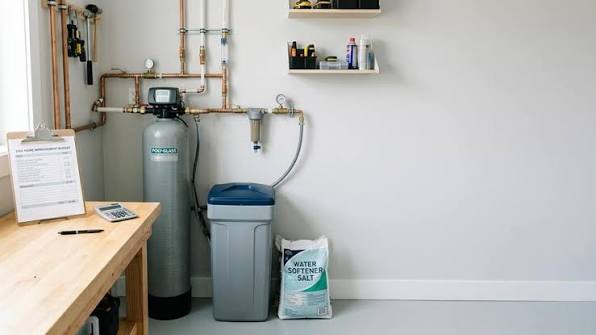
Most traditional water softeners use an ion-exchange process. As water passes through a tank containing resin beads, calcium and magnesium ions are exchanged for sodium or, in some systems, potassium ions. The result is softened water that is less likely to form the familiar mineral scale.
There are other options, too. Some products are designed to condition water or reduce scale formation without removing hardness minerals in the same way. These approaches aren’t identical, so it’s important to understand what a system actually does before buying it. A treatment unit should be selected according to your water test results, household needs, and maintenance preferences.
Give Your Appliances a Little Extra Protection
Mineral deposits can accumulate inside water heaters, washing machines, dishwashers, coffee makers, and other equipment that regularly uses tap water. Depending on the appliance and the severity of the problem, this buildup may interfere with heating efficiency, water flow, or cleaning performance.
Taking steps to protect your appliances starts with paying attention to the manufacturer’s care instructions. Descale kettles and coffee makers as recommended, clean dishwasher filters, and check washing machine maintenance guidance before using any cleaning product. A routine that works for one appliance may not be suitable for another.
Water heaters deserve particular attention because scale can collect on internal components. If you notice unusual noises, inconsistent hot water, or rising energy use, arrange an inspection instead of assuming mineral deposits are the only cause. Sediment, faulty parts, and other issues can create similar symptoms.
It’s also wise to avoid overusing detergent in an attempt to compensate for hard water. More soap doesn’t necessarily mean cleaner clothes or dishes. Follow product directions and consider whether your existing laundry or dishwashing routine needs adjustment.
Small Cleaning Habits That Help
Even if you haven’t installed a treatment system, a few simple habits can make mineral buildup less frustrating. Wiping taps and shower screens dry after use helps prevent droplets from evaporating and leaving visible deposits. In bathrooms, regular ventilation reduces moisture and makes general cleaning easier.
For kettles and showerheads, use a descaling method approved by the manufacturer. Some fixtures have finishes that can be damaged by acidic cleaners or abrasive scrubbing pads, so check the care instructions first. A gentle approach is usually better than attacking stubborn marks with increasingly harsh products.
You can also keep an eye on your water fixtures. If a faucet begins to lose pressure or a showerhead becomes clogged, clean it before the problem gets worse. Where deposits return quickly, consider whether the water itself needs attention rather than relying entirely on repeated cleaning.
These small steps won’t remove hardness from the water supply, but they can make everyday upkeep more manageable while you decide whether a longer-term solution is worthwhile.
Choosing a Solution That Fits Your Household
Before investing in a water treatment system, think about how your household uses water. A family with several bathrooms, frequent laundry loads, and high daily water consumption may have different requirements from a couple living in a smaller home.
Installation space, maintenance costs, regeneration requirements, and the system’s rated capacity all matter. If you’re considering a conventional ion-exchange softener, ask about salt use, drainage needs, and routine servicing. Also discuss drinking water preferences, since softening can increase sodium levels in the treated water.
Not every home needs the same setup. Some properties may benefit from treating the entire household supply, while others may need a more targeted approach. A qualified water treatment professional can explain the available options and help you compare their long-term costs.
Be cautious of claims that promise to solve every water problem with a single device. Hardness, contamination, unpleasant taste, and sediment are different issues, and one treatment method may not address all of them.
A More Comfortable Home Starts with Better Information
Water quality affects many small parts of daily life, from the way laundry feels to how often bathroom fixtures need cleaning. Although hard water is common, you don’t have to accept constant scale buildup as an unavoidable part of homeownership.
Start by identifying the signs, testing your water when appropriate, and learning which treatment options match your needs. Combine that knowledge with simple cleaning habits and regular appliance care. You may not notice the improvement all at once, but fewer stubborn deposits and more predictable maintenance can make a real difference over time.
The best solution isn’t necessarily the most expensive one. It’s the one that addresses your home’s actual water conditions and fits comfortably into your routine, both now and in the years ahead.