
Water is one of those things that works quietly in the background. We turn on the kitchen faucet, fill a glass, start the dishwasher, take a shower, and never really stop to think about what is moving through the pipes. That changes when the water starts tasting different, leaving mineral spots behind, or creating problems with appliances.
At that point, water filtration stops being an abstract home-improvement topic and becomes something practical. The right system can make everyday water more pleasant and, depending on the specific water conditions, help address concerns that aren’t solved by basic filtration alone.
The important part is choosing a solution based on the water you actually have—not simply buying the most complicated system on the market.
Start With the Problem, Not the Product
It’s easy to see a water filter advertised and immediately think, “Maybe that’s what I need.” But water treatment isn’t really a one-product-fits-all situation.
Different homes can have different water characteristics. Hardness, sediment, taste, odor, and other water-quality concerns may require different treatment methods.
Before making a purchase, look around your home. Are there white deposits around faucets? Do drinking glasses have spots? Does your shower leave your skin feeling uncomfortable? Has your water developed an unusual taste?
These details are useful starting points.
Testing the water can provide even more helpful information, especially when you’re unsure what is causing the problem.
Understanding Modern Filtration
Filtration technology has come a long way. Homeowners today can choose from systems designed for specific applications, including whole-home filtration and point-of-use drinking-water treatment.
For people researching kinetico water filtration systems, it’s useful to understand that filtration and water softening aren’t necessarily the same thing. A filtration system may target certain particles, tastes, odors, or other substances depending on the technology used.
A softener, meanwhile, is primarily intended to address hardness minerals.
Knowing that difference can prevent a common mistake: expecting one piece of equipment to solve every water issue in the house.
Why Water Testing Still Matters
Water can look perfectly clear and still contain characteristics you can’t see. On the other hand, cloudy-looking water isn’t automatically a sign of something dangerous.
That’s why testing is often more useful than trying to diagnose water quality by appearance alone.
A basic test may provide information about hardness and other measurable characteristics. More specialized testing can be used when there are concerns about particular substances.
Once you understand what’s actually present, the treatment decision becomes much more straightforward.
It’s similar to fixing a leaking roof. You wouldn’t replace the entire roof before figuring out where the water is getting in.
Hard Water Creates Everyday Frustrations
Hard water is a common reason homeowners start exploring treatment options.
Calcium and magnesium can leave deposits on faucets, showerheads, sinks, and glass surfaces. Over time, the residue can become difficult to remove. You clean the fixture, it looks great for a day or two, and then the spots return.
Hard water can also affect how soap and detergents perform. Some households end up using more cleaning products simply because they don’t seem to work as effectively.
If these problems appear throughout the house, a treatment approach focused specifically on hardness may be worth considering.
What Makes Modern Systems Different?
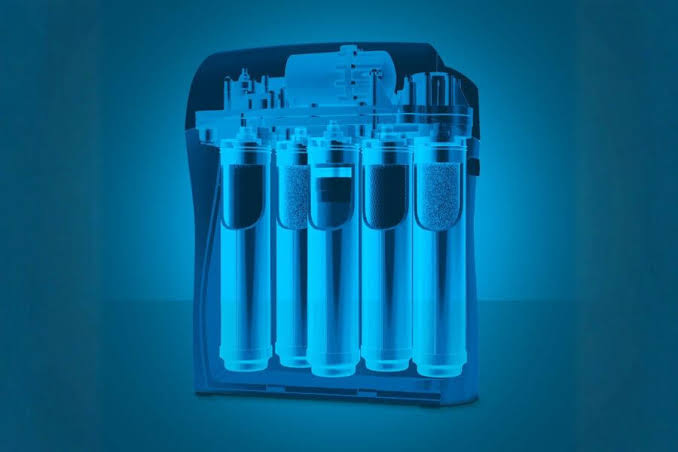
Today’s treatment equipment can incorporate state-of-the-art technologies designed for different water-quality needs. Depending on the system, these technologies may include specialized filtration media, reverse osmosis membranes, carbon filtration, sediment reduction, or other treatment approaches.
But technology by itself isn’t the goal.
A sophisticated system isn’t automatically better for every home. If your main issue is hardness, for example, an advanced drinking-water filter may not address the mineral buildup appearing throughout your plumbing.
Good technology is useful when it’s matched to the right problem.
Drinking Water Needs Its Own Consideration
Many homeowners are especially concerned about the water they drink and use for cooking.
Point-of-use systems can provide treated water at a kitchen faucet or another selected location. Reverse osmosis is another commonly considered option for drinking-water applications because its membrane-based process can reduce certain dissolved substances.
The appropriate choice depends on your source water and what you’re trying to accomplish.
There’s also a practical benefit to understanding the difference between whole-home and point-of-use treatment. You may not need to treat every gallon of water in the house in the same way.
Sometimes focused treatment makes more sense.
Whole-Home Filtration Can Address Wider Concerns
If water-quality issues are affecting multiple areas of the home, whole-home treatment may be worth exploring.
Water enters the property and travels through the plumbing to showers, sinks, appliances, and other fixtures. Treating water at a central point can therefore address certain concerns throughout the house rather than only at one faucet.
This can be particularly useful when homeowners are dealing with sediment, unpleasant taste or odor, or other issues that occur across multiple points of use.
Again, testing helps determine whether this approach is appropriate.
What Should You Look for in a System?
Don’t judge a water-treatment system solely by the number of features listed on the brochure.
Look at what the equipment is actually designed to reduce. Consider flow rate, household water demand, installation requirements, filter replacement, maintenance, and operating costs.
A family of two may have very different needs from a household of six. Likewise, a home using well water may face different challenges from one connected to a municipal supply.
The best system is one that fits the property.
Maintenance Is Easy to Forget
Water treatment equipment generally works without demanding much attention, which is both convenient and slightly dangerous. Because you don’t see it working, it’s easy to forget that it needs maintenance.
Filters eventually need replacement. Certain components require inspection or cleaning. Some systems have specific service schedules that should be followed.
Ignoring these tasks can gradually affect performance.
A simple reminder on your phone or calendar can help keep routine maintenance from being forgotten.
Consider the Long-Term Value
The initial purchase price matters, but it shouldn’t be the only number you consider.
Look at replacement filters, service costs, installation, expected equipment life, and any ongoing operating requirements.
A system that costs slightly more but is easier to maintain and better suited to your home’s water may provide greater value over several years.
On the other hand, don’t pay for features that don’t solve a real problem.
Practicality usually wins in the long run.
Choosing a System With Confidence
If your goal is a clean, safe water filtration system, begin by understanding your water rather than starting with a product catalog.
Observe the signs around your home. Test the water when appropriate. Ask what each treatment method is designed to do, and don’t be afraid to ask about maintenance and long-term costs.
You don’t need to become a water-treatment expert to make a sensible decision. You just need enough information to connect the problem with the right solution.
At the end of the day, good water treatment should feel almost invisible. You turn on the faucet and don’t think about it. You make coffee without wondering why it tastes different. You take a shower without fighting mineral residue afterward.
That’s the real value of choosing the right system—not having more equipment, but having water that quietly fits your everyday life.