
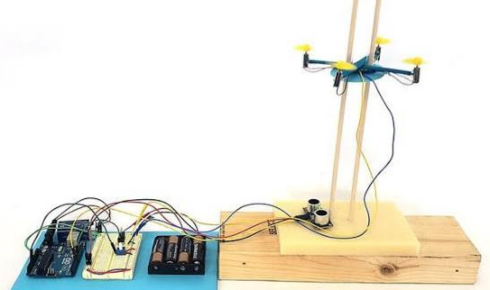
Introduction to Practical Learning in Science Projects
Modern education focuses on practical learning where students build real systems instead of only reading theory. A science working project helps learners understand concepts through experimentation, design, and hands-on implementation. These projects are widely used in schools, colleges, and engineering workshops to develop problem-solving skills and creativity. By combining electronics, mechanics, and programming, students can create innovative models that demonstrate real-world applications. From simple circuits to advanced automation systems, such projects encourage critical thinking and teamwork. In today’s competitive world, practical exposure is essential for technical growth. Working on experimental setups also improves understanding of physics, robotics, and control systems, making learning more engaging and effective for future engineers and innovators overall enhancing technical education and innovation skills significantly improved.
Related brief: E-Bike Motor: Innovate and Explore with a Drone Motor Kit
Role of Solenoid in Automation Systems
Electromechanical components play a key role in automation and robotics systems. A solenoid is a simple yet powerful device that converts electrical energy into linear mechanical motion. It is widely used in door locks, valves, industrial machines, and automotive systems. When electric current passes through its coil, it generates a magnetic field that moves a metal plunger. This motion can be used for switching, locking, or controlling different mechanical operations. Solenoids are valued for their reliability, fast response, and compact design. In science projects, they help students understand electromagnetic principles and real-time actuation. They are also essential in automated systems where precise and repeatable motion is required. Engineers prefer solenoids because they are cost-effective and easy to integrate into electronic circuits for various applications in modern technology making them widely used in engineering and industrial systems across different sectors globally.
UAV Drone Technology in Modern Engineering
Unmanned aerial technology has transformed surveillance, photography, and delivery systems. A uav drone is an advanced flying device controlled remotely or through autonomous programming. It uses sensors, GPS modules, and powerful motors to maintain stability and navigation in the air. These drones are widely used in agriculture, defense, mapping, and disaster management. Students working on robotics projects often use drones to understand aerodynamics and control systems. They can be programmed to follow specific routes or perform automated tasks using embedded software. The integration of cameras and communication systems allows real-time data collection and monitoring. UAV technology continues to evolve, offering new opportunities in research, commercial applications, and environmental studies, making it a key innovation in modern engineering and science education These systems are increasingly adopted for precision tasks requiring efficiency and reliability in complex environments worldwide across research and industry sectors.
Stepper Motor for Precision Control Applications
Motion control systems are essential in robotics, printers, and CNC machines. A stepper motor is a precise electromechanical device that moves in discrete steps rather than continuous rotation. This allows accurate positioning and control without complex feedback systems. Stepper motors are widely used in 3D printers, camera platforms, and automated manufacturing equipment. They provide high torque at low speeds and excellent repeatability, making them ideal for precision applications. In educational science projects, stepper motors help students learn about digital control and mechanical motion. By controlling electrical pulses, users can rotate the motor by exact angles, enabling precise movement in robotic systems. Their simple structure and reliability make them a popular choice for engineers designing automation and embedded systems in modern technology These motors are widely adopted in automation projects requiring accuracy, durability, and efficient motion control systems globally in industries today.
Conclusion
Modern engineering education increasingly relies on practical experimentation and hands-on learning to build strong technical foundations. Combining electronics, mechanics, and programming allows students to develop innovative solutions for real-world problems. Technologies such as automation systems, robotics, and intelligent devices continue to shape the future of industries. By engaging in project-based learning, learners gain valuable experience that improves creativity, problem-solving ability, and technical confidence. These skills are essential for success in today’s rapidly evolving technological world and future career opportunities globally.